Voidpet Dungeon
- 4.5
- Rating
- 1.00M
- Installs
- Free
- Price

 Analysis by App-foxy
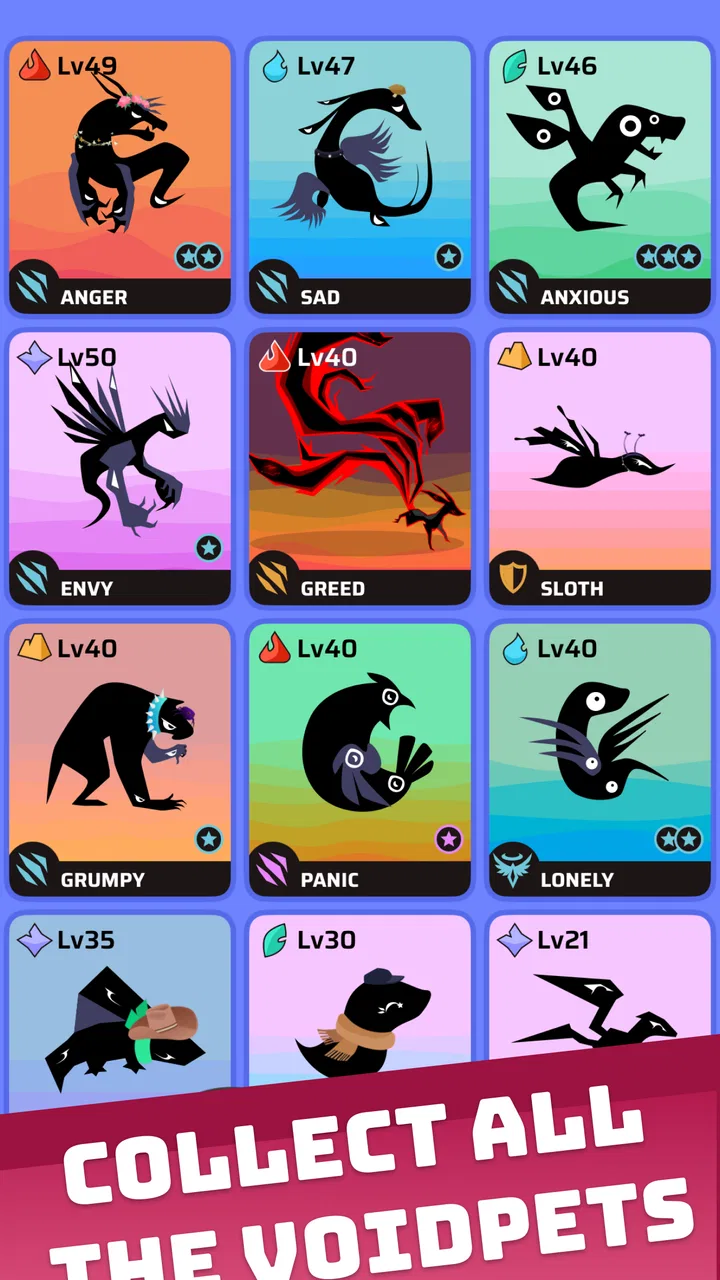
I approached Voidpet Dungeon as a role-playing game first and a creature-collecting game second. Its central promise is easy to understand: build a team, gather equipment, and face increasingly demanding bosses. What matters in practice is whether that loop gives you enough interesting decisions to keep opening the game after the initial curiosity fades. My experience is that it works best as a focused, bite-sized dungeon game for players who enjoy gradually improving a roster, rather than as a huge role-playing adventure with a long story or a highly social world.
That distinction is important when deciding whether to install it. The game is free to start, made by Voidpet, and available to a broad audience with an Everyone 10+ age rating. It has already attracted more than a million installs, while its average score sits at 4.6 from roughly thirty thousand ratings. Those figures suggest that the basic formula connects with many players, but they do not answer the personal question that matters most: will its particular mix of collecting, gear, and boss battles suit the way you like to play?
What to consider before choosing Voidpet Dungeon
I would begin with your preferred session length. If you want a game that can be checked during a break, played while waiting, or returned to several times throughout the day, this is a more natural fit than a large console-style RPG. Its appeal comes from making a little progress with a team and then deciding what to improve next. If you want long conversations, an expansive map, or a role-playing game built around exploration, you may find the dungeon structure narrower than expected.
You May Also Like

 Blood Strike: 2.5 Anniversary
Blood Strike’s Loadouts Turn Every Drop Into a Tactical Gamble
A close look at Blood Strike’s custom loadouts: how fast access to signature weapons reshapes its battle royale rhythm, rewards preparation, and narrows the gap between fights.

 Pandora - Music & Podcasts
Pandora’s Music Is Easy to Start, but Harder to Recover
Pandora’s strength is its low-effort path from a seed to a station. Its weak spot is how much confidence it asks you to place in connection, setup, and quiet recovery.

 8 Ball Pool
 Is Built on Rivalries, Rematches, and Routine
A close look at the rivalries, rematches, shared routines, and unanswered safety questions that turn a quick pool match into a persistent mobile community.

 Samsung Music
’s Quiet Strength Is Playing What You Already Own
Its reach comes less from spectacle than from dependable access to a personal library. That simplicity is both the app’s strongest retention engine and its ceiling.

 AccuWeather: Weather Radar
AccuWeather Review: A Quick, Clear Forecast for Everyday Decisions
For everyday plans, the best forecast is the one you can understand quickly. AccuWeather makes rain timing, radar, and local conditions easy to act on, with a few trade-offs.

 Hill Climb Racing
Why Hill Climb Racing Still Turns Crashes Into One More Run
A tiny car, a bumpy hill and one more upgrade: Hill Climb Racing keeps resurfacing because its simple chaos makes every near-miss feel personal.
More From Our News Desk



The second question is how much you enjoy management. The fun is not only in entering a fight. It is in choosing which creatures deserve attention, deciding how to use newly collected gear, and judging whether your current setup is ready for a tougher boss. Players who like comparing options and preparing for a challenge will find more depth here than the short description suggests. Players who prefer a straightforward action game may experience that preparation as a chore.
I also recommend thinking about your tolerance for free-to-play friction. The game costs nothing to download, but optional purchases range from $0.99 to $99.99 per item. That does not automatically make the experience unfair, yet it does mean that spending can become part of the decision around progression or convenience. I had the best experience treating purchases as entirely optional and setting a personal limit before getting invested in collecting everything.
The core loop is simple, but the choices accumulate
A typical session follows a satisfying pattern. I enter a dungeon, work through encounters, collect rewards, and return to the team screen with a reason to adjust something. That reason might be a new piece of gear, a creature that looks more useful for a particular encounter, or the realization that my current approach is too fragile against a boss. The loop is familiar, but it is the relationship between the roster and equipment that gives it its identity.
The most useful habit is to avoid upgrading every new addition immediately. Early on, it is tempting to spread resources across the whole collection because every creature feels like a possible future favorite. In practice, concentrating improvements on a dependable core makes difficult encounters easier to read. I kept a small working group, tested changes one at a time, and only expanded investment when a battle exposed a clear weakness. That approach reduced waste and made victories feel earned rather than random.
Another practical tip is to treat boss attempts as information-gathering runs, not only pass-or-fail tests. A failed battle can reveal whether the problem is weak damage, poor durability, or a team that takes too long to reach its useful setup. Changing several things at once makes it difficult to understand what helped. Swapping one creature or one important gear choice at a time gives the game a more strategic rhythm and prevents unnecessary rebuilding.
Why the collecting and equipment combination works
Many collection games make the roster the entire point, while simpler dungeon games focus on immediate combat. Voidpet Dungeon sits between those approaches. Collecting gives me a reason to keep exploring, but gear gives each run a practical purpose. A new item is not merely another entry in a catalogue; it can change how I think about the next encounter and whether a familiar team still makes sense.
This also creates a useful distinction between a creature being personally appealing and being useful right now. I often wanted to keep experimenting with a favorite, even when another option fit the current challenge better. That tension is healthy for a role-playing game, because it lets me play according to preference while still rewarding preparation. The trade-off is that players who want every collected creature to remain equally valuable may dislike having to prioritize.
My strongest non-obvious recommendation is to keep a simple mental record of why a team works. Remember whether a successful setup relied on surviving a long fight, dealing damage quickly, or making good use of a particular equipment combination. Without that memory, it is easy to dismantle a reliable team after one exciting new reward. The game becomes more manageable when I regard builds as solutions to specific problems rather than as permanent rankings of the entire collection.
Bosses provide the clearest test of the game
Regular dungeon progress is enjoyable, but bosses are where the design earns its role-playing label. They encourage me to stop relying on a comfortable routine and examine the team more carefully. A boss fight is a useful checkpoint: if I cruise through ordinary encounters but collapse at the final challenge, the answer is usually not simply “play faster.” It is a signal to reconsider preparation.
I found it helpful to enter a boss attempt with one clear question. Can the team survive long enough? Does it have enough damage? Is one member receiving too much pressure? This turns a difficult encounter into a manageable diagnosis. It also prevents the common free-to-play habit of assuming that every obstacle should be solved by waiting or paying. Sometimes the best improvement is a more deliberate team choice rather than a stronger item.
The limitation is that players who need constant mechanical variety may eventually find this structure repetitive. The loop depends on making the next adjustment feel meaningful. When rewards do not change the way I approach a battle, a run can feel like another pass through familiar motions. That is not a flaw for a relaxed collector, but it matters if you expect every stage to introduce a completely new style of play.
How it compares with other role-playing choices
I compare this kind of game with other role-playing choices by asking what I want from a session: a story to follow, quick action, or a team puzzle to work through. Here, I find the most lasting value in testing how creatures and gear handle a particular obstacle, rather than chasing a broad adventure. That preference also shapes how much routine I’m willing to accept, so it’s worth considering what keeps a game enjoyable after its first-week novelty wears off.
Choose it over a story-heavy RPG when preparation is your favorite part
Compared with a traditional story-driven role-playing game, this is much easier to approach in short sessions. I do not need to remember a large cast, follow a complicated plot, or reserve a long uninterrupted evening. The focus is on team development, equipment, and dungeon decisions. That makes it a good companion game for someone who wants progress without committing to a major narrative.
The trade-off is emotional scale. A story-heavy RPG may offer deeper character arcs, a larger world, and more varied exploration. Voidpet Dungeon is not the choice I would make when I want to become absorbed in a fictional journey. Its satisfaction comes from solving the next combat problem and watching a collection become more capable. If narrative is the main reason you play role-playing games, another category will probably serve you better.
Choose it over a pure collection game when battles need to matter
Some collection-focused games are primarily about finding, organizing, and completing a roster. Here, collecting has more purpose because the creatures and gear are tied to dungeon performance. I appreciate that the collection is not merely decorative. It gives me options when a boss exposes a weakness in my preferred setup.
On the other hand, a pure collection game may feel more relaxed and less demanding. If you mainly want to browse characters, complete sets, and avoid repeated combat decisions, the dungeon emphasis could feel like extra work. Voidpet Dungeon asks me to use what I collect, not just admire it. That is a strength for strategic players and a barrier for players seeking a calm catalogue experience.
Choose it over an action game when planning matters more than reflexes
Against fast action role-playing games, this game appeals to a different instinct. I am rewarded for noticing weaknesses, preparing a team, and making sensible upgrades rather than for precise timing or constant movement. That makes it more comfortable on a phone when I want to think through a challenge instead of reacting at speed.
The cost is immediacy. An action game can make every moment feel physically active, while this experience depends more on the satisfaction of a good decision. If you want direct control and a strong sense of moment-to-moment motion, you may find the dungeon loop too measured. I would choose this one when I want a thinking game that still provides the familiar excitement of defeating a boss.
Who should skip it
I would skip it if you dislike repeating encounters to improve a team, feel frustrated by optional purchase prompts in free games, or need a substantial narrative to stay engaged. I would also be cautious if you want a single definitive team with no reason to experiment. The game gets much of its value from comparing possibilities, and that naturally means some collected options will be more useful in one situation than another.
It is also not my first recommendation for someone who wants an entirely passive experience. Even in short sessions, the interesting part is deciding what to change. If you intend to tap through without considering equipment or team composition, much of the role-playing layer will pass you by.
What switching to it actually involves
The cost of switching from another mobile RPG is mostly a change in expectations. You do not need to approach it as a replacement for a huge adventure. I would keep it alongside a story game or action game if those satisfy different moods. The short-session structure makes that combination sensible: one game can provide narrative immersion, while this one offers a compact problem to solve.
There is also a learning cost in deciding what to keep, upgrade, and test. My advice is to resist trying to understand the entire collection at once. Start with a reliable team, learn how equipment changes your results, and use bosses to identify gaps. That workflow makes the transition easier than treating every new reward as an urgent decision.
Version 5.19.18 is the version I reviewed, and the game supports Android 7.0 or later. That makes it accessible to people using older compatible Android devices, although the overall experience will still depend on how smoothly your phone handles the game. On iOS or Android, I would reserve enough storage and battery for the way you personally play, especially if you tend to run several games in rotation.
A realistic everyday use case
Imagine having ten minutes before a commute or while waiting for an appointment. I would open the game, check the team that last handled the dungeon, and choose one modest goal: improve survivability, test a new creature, or make another boss attempt. That is a better use of the available time than starting a long story chapter that I will have to abandon halfway through. Even a failed attempt can be worthwhile if it tells me what to adjust next.
For a longer evening session, I would avoid mindless repetition. I would set a stopping point after a meaningful upgrade or a boss attempt, then return later with a clear plan. This keeps the collection loop from turning into an obligation. The game is most enjoyable when progress feels intentional, not when I am chasing every possible reward simply because it is available.
My recommendation for different kinds of players
For a newcomer to mobile role-playing games, I think this is a friendly starting point if the idea of collecting a team and improving gear sounds more appealing than reading a large amount of story. The basic objective is easy to grasp, while the boss encounters give you a reason to learn the systems instead of tapping through them.
For experienced RPG players, the decision depends on how much depth you need. If you enjoy compact builds and gradual optimization, it can become a pleasant secondary game. If you expect the complexity of a large console RPG, you should approach it as a lighter alternative rather than a full substitute.
For families, the Everyone 10+ rating makes it broadly approachable, but I would still discuss in-app purchases before handing it to a younger player. The free entry point is useful, yet the available item prices span from $0.99 to $99.99, so purchase controls and clear expectations are sensible.
My clear recommendation is to try Voidpet Dungeon if you want a free, collection-driven RPG built around short dungeon sessions, equipment choices, and boss preparation. I would not choose it for a sweeping story, reflex-heavy combat, or a completely frictionless free-to-play experience. After spending time with it, I see its best quality in the small decisions between battles: keeping a dependable core, testing changes carefully, and letting a difficult boss teach me what the team still lacks. That is enough to make it worth trying, especially for players who enjoy turning a modest roster into a purposeful one.
FAQs for Voidpet Dungeon
01What is the primary objective of Voidpet Dungeon?
Voidpet Dungeon challenges players to explore procedurally generated dungeons filled with unique creatures called Voidpets. The main objective is to capture and train these creatures to battle through increasingly difficult levels while uncovering the mysteries of the dungeon. Strategy and planning are crucial to progressing successfully.
02Is Voidpet Dungeon free to play, and are there in-app purchases?
Voidpet Dungeon is available as a free-to-play game, but it offers optional in-app purchases. These purchases can enhance gameplay by providing items, boosts, or additional Voidpets. However, players can enjoy the full experience without spending money, as all content is accessible through regular gameplay.
03What are the system requirements for Voidpet Dungeon on Android and iOS?
Voidpet Dungeon requires a minimum of Android 6.0 or iOS 11.0 to run smoothly. It is optimized for both smartphones and tablets, but for the best experience, devices with at least 2GB of RAM and a decent GPU are recommended. Ensure your device meets these requirements for optimal performance.
04How does the multiplayer feature work in Voidpet Dungeon?
Voidpet Dungeon includes a multiplayer mode where players can team up or compete against each other. Through cooperative dungeons, players can strategize together to overcome tougher challenges. In competitive mode, players can test their Voidpets against others in battles, climbing leaderboards for rewards and recognition.
05What makes Voidpet Dungeon unique compared to other dungeon crawler games?
Voidpet Dungeon stands out due to its charming art style and the unique mechanic of capturing and training Voidpets. The game's procedural generation ensures that each dungeon run is different, offering endless replayability. Additionally, the strategic depth involved in managing and battling with Voidpets adds an engaging layer to the gameplay.
Pros
- Engaging RPG mechanics with pet collection.
- Visually appealing graphics and design.
- Intuitive controls for smooth gameplay.
- Regular updates with new dungeons and pets.
- Strong community support and active forums.
Cons
- In-app purchases can be pricey.
- Requires a stable internet connection.
- Some levels feel repetitive over time.
- Occasional bugs in the latest update.
- Limited offline gameplay options.

Voidpet Dungeon
Gallery